
GLP-1 Medications Explained: How Semaglutide and Tirzepatide Actually Work
A clear, evidence-based explanation of how GLP-1 and dual GIP/GLP-1 medications work, what the head-to-head trials show, and the fine print most clinics skip.
Here is the strange part of the GLP-1 story: the science behind these drugs started with a puzzle nobody could solve for about thirty years.
In the 1960s, researchers noticed something odd. Give a person glucose intravenously, and their pancreas releases a certain amount of insulin. Give that same person the identical amount of glucose by mouth, and the pancreas releases far more — sometimes two or three times more. The bloodstream sees the same sugar either way. So why does the body respond so much more strongly when the sugar arrives through the gut?
The answer, eventually, was that your intestine is an endocrine organ. When food passes through it, the gut releases hormones that travel to the pancreas, the brain, and the stomach, and coordinate the entire response to eating. Researchers called this the incretin effect. One of the hormones responsible turned out to be glucagon-like peptide-1 — GLP-1.
Every medication in this category is a redesigned version of a hormone your own body already makes. That framing matters, because it explains both why these drugs work as broadly as they do and why they come with the specific trade-offs they do.
What GLP-1 does when your body makes it
Eat a meal, and specialized L-cells in your small intestine and colon release GLP-1 within minutes. It does four main things:
It tells the pancreas to release insulin — but only when blood sugar is elevated. This is glucose-dependent, and it's the reason GLP-1 medications on their own rarely cause dangerously low blood sugar. When glucose is normal, the signal quiets down.
It suppresses glucagon, the hormone that tells your liver to dump stored sugar into the bloodstream.
It slows gastric emptying. Food leaves your stomach more slowly, so you feel full sooner and stay full longer. This is also the source of most of the side effects, which we'll get to.
It acts directly on the brain. GLP-1 receptors sit in the hypothalamus and hindbrain, in regions that regulate appetite and reward. This is the part patients describe most vividly — not white-knuckle willpower, but the sudden absence of the internal argument. The phrase people use over and over is "food noise," and its disappearance is usually the first thing they notice.
Natural GLP-1 has one commercial problem: an enzyme called DPP-4 destroys it in under two minutes. Useless as a drug. The entire pharmaceutical achievement here was structural — modifying the peptide so it resists that enzyme and binds to albumin in the blood, stretching a two-minute half-life into roughly seven days.
That's semaglutide. Same signal your gut sends. Vastly longer duration.
Where tirzepatide diverges
Tirzepatide does something different enough that lumping it in as "another GLP-1" undersells it.
GLP-1 is not the only incretin hormone. There's a second one, glucose-dependent insulinotropic polypeptide (GIP), released from the upper small intestine. GIP was long considered the disappointing sibling — in people with type 2 diabetes, its insulin-releasing effect appeared blunted, and interest faded.
Then the picture got more interesting. GIP receptors turn out to be densely expressed in adipose tissue and in the brain, where they appear to influence energy expenditure, fat handling, and nausea signaling. There's a working hypothesis — still being tested — that adding GIP agonism improves tolerability enough that patients can stay on higher effective doses.
Tirzepatide is a single molecule that activates both receptors. It's not two drugs combined; it's one peptide engineered to hit two targets, with a structure biased toward GIP.
Whether the extra weight loss comes from the GIP activity itself or from better tolerability at higher doses is genuinely unresolved. The clinical result, though, is not.
What the trials actually show
Marketing rounds these numbers. Here they are as published.
STEP 1 (semaglutide 2.4 mg, 68 weeks, 1,961 adults without diabetes): mean weight loss of 14.9% versus 2.4% on placebo. About one in three participants lost 20% or more.
SURMOUNT-1 (tirzepatide, 72 weeks, 2,539 adults without diabetes): 15.0% at the 5 mg dose, 19.5% at 10 mg, and 20.9% at 15 mg, versus 3.1% on placebo.
Those are separate trials with different populations, so comparing them directly is bad practice. Which is why SURMOUNT-5 mattered.
SURMOUNT-5 put the two drugs head to head: 751 adults with obesity and without diabetes, 72 weeks, maximum tolerated doses of each. Results:
| Tirzepatide | Semaglutide | |
|---|---|---|
| Mean weight change | −20.2% | −13.7% |
| Mean weight lost | 22.8 kg (~50 lb) | 15.0 kg (~33 lb) |
| Waist circumference | −18.4 cm | −13.0 cm |
| Discontinued for GI side effects | 2.7% | 5.6% |
Tirzepatide won on magnitude. Worth noting from the same dataset: men lost 6 to 7 percentage points less weight than women in both arms — a consistent finding across this drug class that rarely makes it into the marketing.
Also worth saying plainly: 13.7% is not a failure. For most people carrying 30 or 40 excess pounds, either result is more weight loss than any lifestyle intervention has reliably produced in a randomized trial. The right question is which medication fits a particular person's tolerability, response, cost, and comorbidities — not which one won a trial.
The part that isn't about weight
If these drugs only reduced body weight, they'd be significant. What has genuinely reshaped the field is what showed up in the cardiovascular and organ outcome trials.
SELECT enrolled more than 17,600 adults with overweight or obesity and established cardiovascular disease — but without diabetes. Semaglutide reduced major adverse cardiovascular events (cardiovascular death, non-fatal heart attack, non-fatal stroke) by 20% versus placebo. The curves separated well before most of the weight loss had accumulated, which suggests mechanisms beyond weight alone: effects on inflammation, endothelial function, and possibly plaque itself.
Additional signals have followed. In chronic kidney disease with type 2 diabetes, semaglutide slowed progression toward kidney failure. In obstructive sleep apnea, tirzepatide substantially reduced apnea-hypopnea events. Trials in heart failure with preserved ejection fraction and in knee osteoarthritis have reported meaningful improvement.
The emerging read is that these medications act on a metabolic and inflammatory axis that touches many organ systems — and that weight loss is one output of that, not the whole mechanism.
The pill
For years the honest answer to "is there a version I don't have to inject?" was: not one that works as well.
That changed on December 22, 2025, when the FDA approved oral semaglutide 25 mg — the first oral GLP-1 approved for weight management. In the OASIS 4 trial, participants lost a mean of 13.6% of body weight over 64 weeks versus about 2% on placebo — 16.6% among those who stayed on treatment — and about 30% lost 20% or more.
Peptides are normally destroyed by stomach acid and digestive enzymes, which is why they're injected. The oral formulation solves this with an absorption enhancer that transiently raises local gastric pH and helps the peptide cross the stomach lining. It works — but it makes the tablet fussy. It has to be taken on an empty stomach, with no more than about 4 ounces of plain water, and nothing else by mouth for at least 30 minutes afterward. Absorption is variable, and adherence to that window genuinely determines whether it works.
For needle-averse patients, it's a real option. It is not a lower-effort option.
The fine print
This is where most clinic content goes quiet. It shouldn't.
Gastrointestinal side effects are common, not rare. Nausea, constipation, diarrhea, reflux, and burping affect a substantial share of patients, concentrated during dose escalation. Most cases are mild to moderate and improve as the body adapts. Slower titration usually helps more than pushing through.
Rare but serious risks exist. Pancreatitis, gallbladder disease (partly a consequence of rapid weight loss itself), bowel obstruction, and worsening of existing gastroparesis. These drugs carry a boxed warning based on thyroid C-cell tumors in rodents; they are contraindicated in anyone with a personal or family history of medullary thyroid carcinoma or MEN2 syndrome. Whether that rodent finding translates to humans remains unestablished — the contraindication is a precaution, and an appropriate one.
Anesthesia matters. Because these drugs slow gastric emptying, patients may retain stomach contents long past a standard fasting window, raising aspiration risk. Tell any surgeon or anesthesiologist you are on one, well before a procedure.
You lose muscle along with fat. In most weight-loss studies, somewhere between a quarter and 40% of total weight lost is lean mass. Some of that is expected — a smaller body needs less structural tissue. But muscle is metabolically active, it's the single largest reservoir for glucose disposal, and it is the tissue most tightly linked to functional independence in later decades. Losing it carelessly is the most common unforced error in medical weight loss.
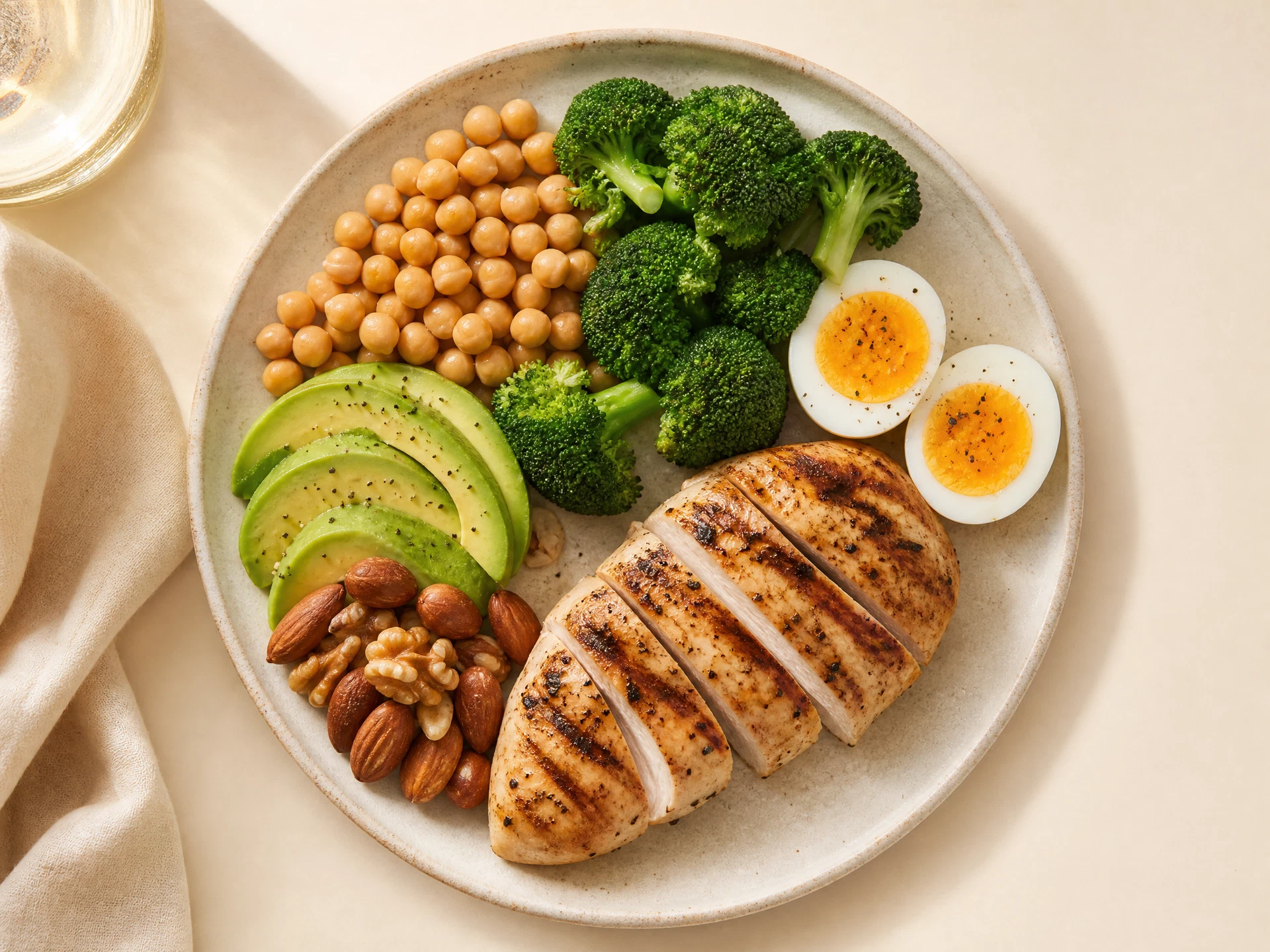
The countermeasures are unglamorous and effective: adequate protein — generally around 1.6 g per kilogram of body weight per day, which is difficult on a suppressed appetite and requires deliberate planning — and resistance training at least twice weekly. If a weight-loss program isn't addressing both, it's incomplete. We go deeper in How Much Protein Do You Really Need?.
Stopping usually means regaining. In the STEP 1 extension, participants who came off semaglutide regained about two-thirds of their lost weight within a year. This is not a moral failure and it isn't unique to these drugs — it's what happens when you withdraw a treatment for a chronic, relapsing condition. Obesity behaves like hypertension: treat it and the numbers improve; stop treating it and they drift back. Anyone starting should have a frank conversation about what the multi-year plan looks like, including maintenance dosing.
Ask exactly what you are being prescribed. During the 2022–2024 shortages, federal rules permitted compounding pharmacies to produce copies of semaglutide and tirzepatide. Those shortages were formally resolved — tirzepatide in late 2024, semaglutide on February 21, 2025 — and that exception closed with them. Compounded versions of these molecules are now permitted only in narrow, documented, patient-specific circumstances, and in April 2026 the FDA proposed permanently excluding semaglutide, tirzepatide, and liraglutide from the bulk substances list used by outsourcing facilities. State boards and attorneys general have brought enforcement actions, and in June 2026 the FDA issued roughly two dozen warning letters to telehealth companies over how they marketed compounded GLP-1s.
What those letters objected to is worth knowing, because it tells you what to listen for. The agency cited companies that called a compounded drug a "generic" of the branded product, implied it had been FDA-approved or reviewed, claimed it was "clinically proven" to work the same way, used "same active ingredient" to suggest equivalence, or described their pharmacy as FDA-approved or FDA-licensed — the FDA does not approve or license pharmacies at all.
None of that makes compounded medicine illegitimate. Compounding exists for good clinical reasons, and a compounded preparation can be entirely appropriate when there's a documented reason you need one. But a compounded drug is not the approved drug, it has not been through FDA review, and any program describing it as though it had is telling you something about itself.
So: ask any provider, in writing, whether you are receiving the FDA-approved product or a compounded preparation, and if compounded, what the documented clinical justification is and which licensed pharmacy prepared it. A program that answers that cleanly — and offers you the branded option if you want it — is operating in good faith.
Who these medications suit — and who they don't
Current labeling covers adults with a BMI of 30 or above, or 27 or above with at least one weight-related condition such as hypertension, dyslipidemia, obstructive sleep apnea, or type 2 diabetes.
But BMI is a population statistic doing a poor job as an individual diagnostic. It doesn't distinguish muscle from fat or account for where fat sits. A lean-appearing person with visceral adiposity, elevated triglycerides, and rising fasting insulin may be metabolically worse off than someone heavier with clean markers. This is why an actual evaluation — history, labs, medications, goals — outperforms a number on a chart.
These medications are not appropriate during pregnancy or while trying to conceive, in people with a history of pancreatitis or medullary thyroid carcinoma or MEN2, or in the presence of active eating-disorder pathology, where appetite suppression can be genuinely harmful.
And they aren't a substitute for the rest of it. They quiet the appetite signal, which removes the hardest obstacle. What you build in that window — protein intake, resistance training, sleep, alcohol habits — determines whether the result holds.
The way to think about it
Every pound of muscle you keep, every point of improvement in your metabolic markers, every year you spend at a lower cardiometabolic risk is deposited into a reserve you draw on later. These medications can open a window that most people have never had. What matters is what you build inside it.
If you're weighing this decision, the useful next step isn't picking a drug. It's getting a clear picture of where your metabolic health actually stands — which starts with the right labs. See 5 Biomarkers Everyone Should Track After 30.
Frequently asked questions
Is tirzepatide simply better than semaglutide? It produced greater average weight loss in a direct head-to-head trial. "Better for you" depends on tolerability, comorbidities, cost, and how you respond — some people do exceptionally well on semaglutide and poorly on tirzepatide. Semaglutide also has the larger cardiovascular outcomes dataset, which can be decisive in the right patient.
How fast does it work? Appetite changes often appear within the first week or two. Weight loss is gradual and accumulates over months; the pivotal trials ran 68 to 72 weeks and participants were generally still losing at the end.
Will I have to take this forever? Possibly, at some dose. Most people regain a large share of lost weight after stopping. Some maintain on a reduced maintenance dose. This is a conversation to have before starting, not after.
Do these drugs damage muscle? They don't attack muscle directly. But any substantial weight loss costs lean mass, and appetite suppression makes it easy to under-eat protein. Adequate protein and resistance training are the mitigation.
Are compounded versions the same thing? No. Compounded preparations are not FDA-approved, are not reviewed for safety, efficacy, or manufacturing quality, and since the shortages resolved may only be produced under narrow patient-specific conditions. Ask exactly what you're being prescribed.
References
- Wilding JPH, et al. Once-weekly semaglutide in adults with overweight or obesity (STEP 1). N Engl J Med. 2021;384:989–1002. pubmed.ncbi.nlm.nih.gov
- Jastreboff AM, et al. Tirzepatide once weekly for the treatment of obesity (SURMOUNT-1). N Engl J Med. 2022;387:205–216. pubmed.ncbi.nlm.nih.gov
- Aronne LJ, et al. Tirzepatide as compared with semaglutide for the treatment of obesity (SURMOUNT-5). N Engl J Med. 2025;393:26–36. pubmed.ncbi.nlm.nih.gov
- Lincoff AM, et al. Semaglutide and cardiovascular outcomes in obesity without diabetes (SELECT). N Engl J Med. 2023;389:2221–2232. pubmed.ncbi.nlm.nih.gov
- Perkovic V, et al. Effects of semaglutide on chronic kidney disease in patients with type 2 diabetes (FLOW). N Engl J Med. 2024. pubmed.ncbi.nlm.nih.gov
- Malhotra A, et al. Tirzepatide for the treatment of obstructive sleep apnea and obesity (SURMOUNT-OSA). N Engl J Med. 2024. pubmed.ncbi.nlm.nih.gov
- Oral semaglutide at a dose of 25 mg in adults with overweight or obesity (OASIS 4). N Engl J Med. 2025. pubmed.ncbi.nlm.nih.gov
- Wilding JPH, et al. Weight regain and cardiometabolic effects after withdrawal of semaglutide: the STEP 1 trial extension. Diabetes Obes Metab. 2022. pubmed.ncbi.nlm.nih.gov
- U.S. Food and Drug Administration. FDA clarifies policies for compounders as national GLP-1 supply begins to stabilize. www.fda.gov
This article is educational and is not medical advice, a diagnosis, or a treatment recommendation. GLP-1 and dual GIP/GLP-1 medications are prescription drugs and are prescribed only after evaluation by a licensed clinician who has reviewed your history. Individual results vary. If you have questions about your own health, speak with a licensed provider.
Reserve Longevity connects patients with licensed providers in all 50 states. Every prescription follows a one-to-one provider visit.
Wondering how this applies to you?
A Reserve clinician can review your history and goals, and talk through whether a GLP-1 medication makes sense for you.
Start with a provider evaluation