Editorial update: September 26, 2026
On this page
WHY THIS MATTERS
Build capacity for everyday life
Strength, stamina, and balance help you stay active and independent. Resistance and aerobic training support different aspects of everyday physical function.
Start at a manageable level and build gradually. Consistent practice and recovery help you maintain the abilities needed for the activities that matter to you.
- Combine strength, aerobic, and balance work.
- Progress gradually with good technique.
- Track improvements in everyday tasks.
WAYS TO ADDRESS IT
A practical place to begin
- Perform progressive resistance training at least two days each week.
- Build toward regular moderate aerobic activity and break up long sitting periods.
- Include balance, mobility, and power work appropriate to current ability.
- Progress load and volume gradually while protecting technique.
- Use coaching or physical therapy when pain, injury, or uncertainty limits safe training.
How training helps
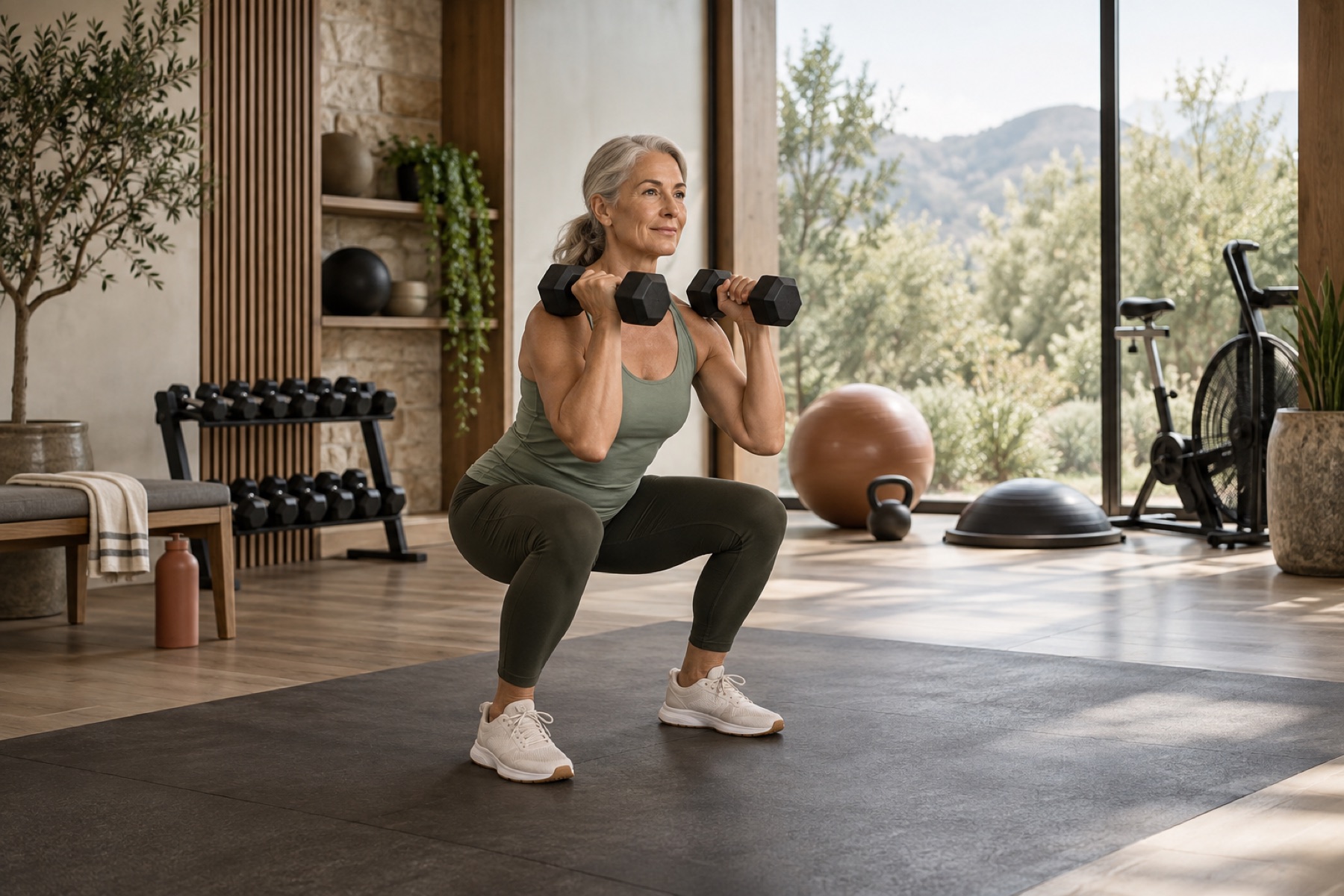
Resistance training asks muscles to work against a load, such as body weight, a band, a weight, or a machine. Gradually increasing the challenge helps build strength. In a trial of relatively healthy adults around retirement age, a year of heavy resistance training produced leg-strength benefits that were still evident at a four-year follow-up. The finding supports consistent training, not a particular equipment brand. [1]
Aerobic activity challenges the heart and lungs. Balance practice supports stability, especially as people get older. Mobility work helps you practice the range of movement you need for everyday tasks or exercise. [2, 3]
A practical starting point
For general health, adults should work toward at least 150 minutes of moderate aerobic activity each week, or 75 minutes of vigorous activity, plus muscle-strengthening activity on at least two days. The strengthening work should cover the major muscle groups. Older adults should also include balance activities. Adapt these goals to your abilities and health. [2, 3]
You can build activity in smaller amounts. If you are starting from little activity, a manageable walk and a few familiar strength movements may be a better beginning than an ambitious schedule you cannot repeat.
Tools to explore
Bodyweight movements: A convenient way to begin, with options that can be adjusted to your ability. A stable chair or support can help with selected exercises.
Resistance bands or free weights: Flexible ways to add resistance at home. Choose equipment you can use with control and store safely.
Walking and other aerobic options: Pick an activity you enjoy and can access regularly. A treadmill, bike, or other machine is useful when it makes participation easier.
Qualified coaching: Consider support when you want help with technique, progression, or adapting exercise to your starting point. Rehabilitation needs may require a physical therapist.
Measure useful progress
Track participation, the resistance you use, or how everyday tasks feel. Progress may mean carrying a load more comfortably or walking farther at a similar effort. A wearable score can add context, but it does not define your fitness.
Increase challenge gradually and make room for recovery. If building muscle is a priority, consider the evidence before routinely adding a cold plunge immediately after strength work. [4]
Before you begin
Seek guidance for an existing injury, repeated falls, or a medical condition that affects exercise. Stop and seek medical help for chest pain, fainting, or unusual severe breathlessness. Choose a pace and setting that let you learn with confidence.
ACCOUNT BENEFITS
Partner offers for your routine.
Explore available partner offers with a free Reserve account.
View partner offers →